Muscle Cramps During Exercise: Biological Causes and Immediate Solutions
 RECOVERY
What Actually Causes Muscle Cramps During Exercise
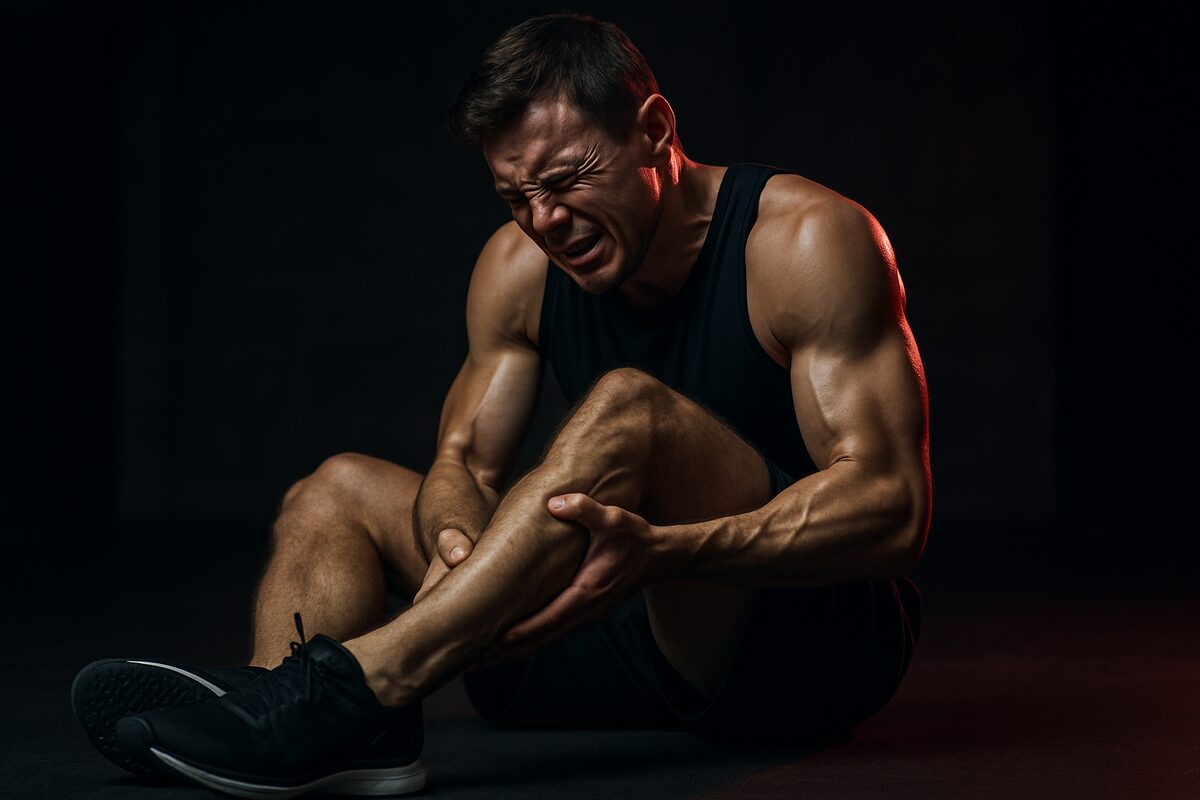
Muscle cramps during exercise — those sudden, involuntary contractions that can halt an athlete mid-stride — are more complex than most training guides suggest. For years, the dominant theory blamed dehydration and electrolyte loss alone. While these factors matter, current sports science points to a far more nuanced biological picture involving your nervous system, muscle mechanics, and training load all at once.
The most widely supported model today is the neuromuscular fatigue hypothesis. When a muscle is pushed past its fatigue threshold, the nerve signals controlling contraction become dysregulated. Specifically, alpha motor neurons fire too frequently while inhibitory signals from the Golgi tendon organs weaken. The result: a sustained, painful contraction you cannot override by will alone.
The Electrolyte Connection: Real but Partial
Sodium, potassium, calcium, and magnesium all regulate the electrical gradients that trigger and release muscle contractions. When sweat strips these minerals — up to 1,000 mg of sodium per liter during high-intensity sessions — the ionic balance at the neuromuscular junction shifts, increasing muscle excitability.
Research from the University of Cape Town found that cramping athletes showed no consistent difference in blood sodium or hydration compared to non-cramping controls during a triathlon. This suggests electrolyte imbalance is a contributing factor in specific contexts (especially prolonged heat exposure) but rarely the sole cause.
The practical takeaway: replace electrolytes and manage neuromuscular fatigue. Addressing only one layer gives partial results.
Muscle Fiber Recruitment and Shortened Length
Cramps hit most often in muscles operating at shortened lengths — calves during cycling, hamstrings during sprinting, foot intrinsics during long runs. When a muscle is simultaneously shortened and under load, the Golgi tendon organ (your built-in inhibitory brake) becomes less mechanically effective. The motor neuron pool receives fewer «release» signals, and a cramp becomes significantly more likely.
This is why elite coaches increasingly treat cramp prevention as a neuromuscular training problem as much as a nutrition one.
Muscle Cramps During Exercise: Immediate Solutions to Apply in 90 Seconds
Understanding the biology directly changes how you respond in the moment.
1. Passive Stretch Combined With Antagonist Contraction
Passively lengthen the cramping muscle to mechanically re-engage the Golgi tendon organ. For a calf cramp: dorsiflex the foot, pulling toes toward the shin, while simultaneously contracting your tibialis anterior (the muscle along the front of the shin). This antagonist activation sends inhibitory signals that interrupt the cramp cycle — typically within 20–30 seconds. This technique works because it restores the normal push-pull balance between opposing muscle groups.
2. Pickle Juice or Bitter Stimuli (85 ml)
Multiple peer-reviewed trials show that pickle juice resolves exercise-associated muscle cramps about 45% faster than water alone. The mechanism is not electrolyte absorption — it acts too quickly for intestinal uptake. Researchers believe it triggers oropharyngeal receptors that modulate spinal motor neuron excitability directly. Two to three teaspoons is the practical field dose; 85 ml is the effective dose validated in controlled studies.
3. Sustained Pressure and Controlled Breathing
Apply firm, sustained pressure to the belly of the cramping muscle while taking slow diaphragmatic breaths — inhale for 4 seconds, exhale for 6. The breathing pattern reduces sympathetic nervous system drive; the manual pressure provides proprioceptive input that helps reset the aberrant motor pattern. Hold for 30–45 seconds without releasing.
4. Low-Intensity Movement Immediately After
Once the acute cramp releases, do not stop moving entirely. Walk slowly or pedal at minimal resistance for 3–5 minutes. Light movement flushes metabolic byproducts (lactate, inorganic phosphate) from the tissue and prevents the neuromuscular system from cycling back into another cramp episode.
Prevention: Addressing the Biological Root Causes
Training Load Progression
The majority of exercise-associated muscle cramps occur when athletes push beyond their current neuromuscular capacity — a new distance PR, a sudden increase in squat volume, or a race on unfamiliar terrain. The classic error is increasing both intensity and volume simultaneously. Apply the 10% weekly load rule: raise total training volume by no more than 10% per week. This gives motor recruitment patterns time to consolidate before the next stimulus.
If you are returning from a break or changing sports modalities, start 20–30% below your previous capacity and build back over 3–4 weeks.
Electrolyte and Hydration Protocol
- Drink 500 ml of fluid in the 2 hours before training
- For sessions exceeding 60 minutes, include a sodium source: 300–500 mg per hour under high sweat conditions
- Prioritize magnesium post-workout (310–420 mg per day from food or supplementation) — magnesium deficiency directly impairs Golgi tendon organ sensitivity and is widespread in active populations
For a complete, evidence-based breakdown of electrolyte and mineral supplementation by training phase, the [MedFitness supplement guide](/blog/supplements-guide-complet) covers safe dosing strategies for every training level.
Strength Training for Cramp-Prone Muscles
Regularly loading muscles in their lengthened position is one of the most underused cramp-prevention tools available. For calves: seated calf raises load the soleus at a longer length than standing versions. For hamstrings: Romanian deadlifts and Nordic curls are highly effective. Target 2–3 sets of 8–12 reps, twice per week. Over 6–8 weeks, this measurably improves Golgi tendon organ function and cramp resistance.
Recovery Quality: The Often-Ignored Variable
Nighttime cramps — most commonly in the calves — correlate strongly with accumulated neuromuscular fatigue and poor sleep quality. If you experience cramps both during sessions and at rest, your body is signaling a recovery deficit that progressive loading will only worsen. Building [structured recovery into your routine — sleep, stretching, and nutrition timing](/blog/recuperation-musculaire-sommeil-stretching-nutrition) is not optional support work; it is where adaptation actually happens.
The Bottom Line
Muscle cramps during exercise are not a sign of weakness. They are a precise signal from your neuromuscular system: fatigue has outpaced recovery, ion balance has shifted, or mechanical conditions have aligned against you. The best athletes do not avoid cramps because they are tougher — they avoid them because they manage training load intelligently, fuel precisely, and recover with the same discipline they bring to the gym.
Apply the immediate solutions above to stop a cramp within 90 seconds. Then audit your weekly volume progression, hydration strategy, and sleep quality to close the gap between stimulus and adaptation. That is where durable performance lives.